Dating After 50 for Women: What's Actually Different, and How to Begin Again
You're not 25, and that turns out to be good news. The numbers, the options nobody mentions, and a sane way to start.
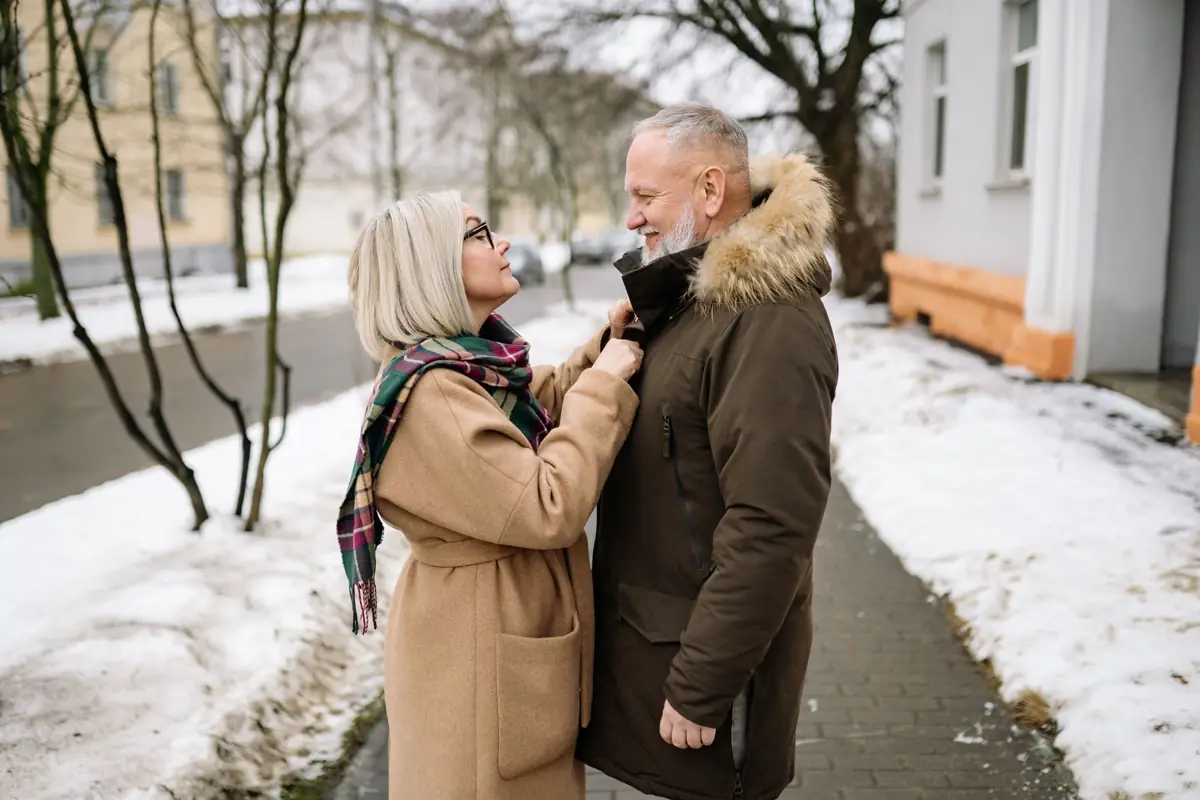
Dating after 50 for women is less about finding someone fast and more about choosing well. Many women your age are single again, and fewer of them rush back into marriage. Living together, staying unmarried, or even keeping separate homes are all common paths now. Start slowly: meet through friends, activities, and one reputable app, keep early dates short and public, and let what you want now, not what you wanted at 25, guide you.
In this piece
- What's actually different at 50+
- The realistic numbers, without the doom
- Living apart together: an option worth knowing about
- What you want now vs. what you wanted at 25
- How to start: where to meet men after 50
- Pace: slower is not a weakness
- Safety basics that cost you nothing
- Why it's worth it, even if you take your time
What's actually different at 50+
The first difference is that you are not alone in this. Researchers who studied US divorce trends found that the divorce rate among adults over 50 roughly doubled between 1990 and 2010, and by 2010 about one in four people divorcing were 50 or older (Brown & Lin, 2012). They called it the "gray divorce revolution." Add the women who are widowed, and the pool of people starting over in midlife is far larger than it was a generation ago.
The second difference is you. At 25, many of us were still assembling a life: a career, a home, maybe children, a sense of who we were. At 52 or 58, most of that is already built. You have a schedule, friendships, opinions about how the dishwasher should be loaded, and a history that taught you some things the hard way. That changes what a partner needs to fit into.
The third difference is the timeline. There is no biological clock pushing you toward a wedding by a certain age. That can feel strange at first, since so much of the old dating script was built around marriage and family. Without it, you get to ask a quieter question: what kind of companionship would actually make my life better?
The realistic numbers, without the doom
You may have heard that women over 50 "never" find anyone. That is not what the research shows, though the honest picture is more nuanced than a magazine headline.
A large study that followed people through the Health and Retirement Study from 1998 to 2014 looked at what happened after a gray divorce. Within ten years, about 22% of women and 37% of men had repartnered (Brown et al., 2019). Two details in that study matter for you. First, repartnering happened more often through living together than through remarriage. Second, people with more resources, such as financial stability, good health, and strong social ties, were more likely to repartner.
Read that second point carefully, because it is good news dressed as a statistic. Social ties and health are things you can tend to. A full life is not only nice for its own sake; it seems to be connected to meeting someone, too.
And the first point opens a door many women don't realize is there. Marriage is no longer the only finish line.
Living apart together: an option worth knowing about
Some couples in later life choose to be fully committed while keeping separate homes. Researchers call this "living apart together." One study interviewed 25 older adults to understand how they came to prefer it (Benson & Coleman, 2016). Their reasons included personal and relationship goals, their age, the burden of caregiving, things about their partner, what their earlier relationships had taught them, and changing social attitudes that made the arrangement feel acceptable.
Imagine a woman, call her Linda, 56. She spent 27 years running a household around someone else's needs and then two years caring for her mother. She loves her new partner. She also loves waking up in her own house, with her own coffee mug and her own quiet. For Linda, living apart together isn't a compromise. It's the shape of love that fits the life she has now.
You don't have to decide any of this on a first date. Just know that the menu is bigger than "marry again or stay alone."
Our companion video for this piece is in production. It will appear here when it's published.
What you want now vs. what you wanted at 25
Psychologist Laura Carstensen and colleagues developed socioemotional selectivity theory, which holds that as people perceive their time as more limited, they prioritize emotionally meaningful goals and close relationships (Carstensen et al., 1999). In plain terms: you are less interested in collecting experiences and more interested in the ones that feel good and true.
That shift shows up in dating. At 25, you might have been drawn to excitement, status, or someone everyone else found impressive. Now, many women find they care more about:
- Kindness that shows up on an ordinary Tuesday, not only on special occasions
- Emotional steadiness, meaning he doesn't make every disagreement a crisis
- Respect for the life, family, and friendships you already have
- Reliability: he calls when he says he'll call
- Shared values about money, health, and how to spend free time
There's another quiet advantage on your side. A study of more than 86,000 people aged 18 to 70 found that attachment anxiety, the worry about being abandoned or not loved enough, was highest in younger adults and lowest in middle-aged and older adults (Chopik et al., 2013). Many women feel more grounded now than they did in their twenties, even if the first few dates still bring butterflies. If you're curious where you land, our short attachment style quiz can give you a starting point.
How to start: where to meet men after 50
There is no single right place. Most women do best with a mix.
Through people you already know. Tell two or three trusted friends that you're open to meeting someone. It feels awkward for about thirty seconds. Friends of friends come with a built-in reference check.
Through things you already enjoy. A hiking group, a community choir, a volunteer shift at the food bank, a class at the community college. You'll meet people around shared interests, and even if no romance comes of it, your social life grows. Remember that the repartnering study linked social ties with finding a partner.
Online, chosen carefully. According to Pew Research Center, 30% of US adults have ever used a dating site or app, including 20% of adults aged 50 to 64 and 13% of those 65 and older (Pew Research Center, 2023). So you're far from the only woman your age on there. Pick one app, write an honest profile with recent photos, and give it a few months before judging.
Pace: slower is not a weakness
After a long marriage or a loss, it's common to swing between two extremes: not wanting to date at all, or falling hard for the first warm person who pays attention. Neither is a character flaw. Both are signs that your heart is recalibrating.
A gentle pace might look like this:
- One or two dates a week at most, so dating doesn't take over your life.
- Short first meetings, like coffee or a walk, about an hour.
- No big decisions in the first few months: no moving in, no merging finances, no introducing him to the grandkids right away.
- Regular check-ins with yourself: Do I feel calmer or more anxious since I started seeing him?
If you're still raw from a divorce, our guide to dating after divorce walks through how to tell whether you're ready. And if your confidence took a hit, start with rebuilding confidence after divorce before you open an app.
Safety basics that cost you nothing
Most men you meet will be ordinary, decent people who are nervous too. A few habits protect you from the rare exceptions without making you suspicious of everyone.
- Meet in public for the first several dates, and drive yourself.
- Tell a friend where you're going and when you expect to be home.
- Keep your home address, workplace, and financial details private until you know him well.
- Video chat before meeting someone from an app, especially if he lives far away.
- Never send money, gift cards, or cryptocurrency to someone you met online, no matter how moving the story.
That last rule is non-negotiable. Romance scammers deliberately target people who are lonely or newly single, and the story is often heartbreaking by design. We cover the patterns in detail in online dating red flags over 50.
Why it's worth it, even if you take your time
Wanting connection isn't needy or silly. A review of 148 studies found that people with stronger social relationships had about a 50% greater likelihood of survival over the study periods (Holt-Lunstad et al., 2010). Those relationships included friends, family, and community, not only romantic partners. So a good partner can add to your life, but a good life doesn't depend on one.
That may be the healthiest way to approach dating after 50: as an addition, not a rescue. You already have a life worth sharing. You get to be choosy about who joins it.
This article is educational guidance, not therapy. If grief, loneliness, or anxiety feels heavy most days, a licensed counselor can help you carry it.
Questions readers ask
Is it harder for women to find a partner after 50?
In one large study of people who divorced after 50, about 22% of women and 37% of men had repartnered within ten years. So the numbers do differ by gender. But many women aren't looking to remarry at all, and people with strong health, finances, and social ties were more likely to repartner. Those are areas you can actively build.
Where do women over 50 meet men?
The most reliable mix is friends of friends, activities you already enjoy, and one well-chosen dating app. About one in five US adults aged 50 to 64 has used online dating, according to Pew Research Center. Volunteering, classes, clubs, and faith communities also put you in regular contact with people who share your values.
How soon should I date after divorce or losing a spouse?
There's no fixed timeline. A better test is whether you want to meet someone new for who he is, rather than to fill a hole or prove something to your ex. If you still cry most days or compare every man to your former husband, give yourself more time. Going slowly is perfectly fine.
Do I have to remarry or live together?
No. Many couples in later life live together without marrying, and some choose "living apart together," a committed relationship with separate homes. Researchers found people chose it for reasons like personal goals, caregiving responsibilities, and lessons from past relationships. What matters is that the arrangement fits both of you.
Is online dating safe for women over 50?
It can be, with sensible habits. Meet in public, drive yourself, tell a friend your plans, and video chat first. The biggest risk at this age is romance scams, so never send money or gift cards to someone you haven't met, no matter the reason he gives.
Sources
- Benson, J. J., & Coleman, M. (2016). Older adults developing a preference for living apart together. Journal of Marriage and Family, 78(3), 797-812. doi.org/10.1111/jomf.12292
- Brown, S. L., & Lin, I.-F. (2012). The gray divorce revolution: Rising divorce among middle-aged and older adults, 1990-2010. The Journals of Gerontology: Series B, 67(6), 731-741. doi.org/10.1093/geronb/gbs089
- Brown, S. L., Lin, I.-F., Hammersmith, A. M., & Wright, M. R. (2019). Repartnering following gray divorce: The roles of resources and constraints for women and men. Demography, 56(2), 503-523. doi.org/10.1007/s13524-018-0752-x
- Carstensen, L. L., Isaacowitz, D. M., & Charles, S. T. (1999). Taking time seriously: A theory of socioemotional selectivity. American Psychologist, 54(3), 165-181. doi.org/10.1037/0003-066X.54.3.165
- Chopik, W. J., Edelstein, R. S., & Fraley, R. C. (2013). From the cradle to the grave: Age differences in attachment from early adulthood to old age. Journal of Personality, 81(2), 171-183. doi.org/10.1111/j.1467-6494.2012.00793.x
- Holt-Lunstad, J., Smith, T. B., & Layton, J. B. (2010). Social relationships and mortality risk: A meta-analytic review. PLoS Medicine, 7(7), e1000316. doi.org/10.1371/journal.pmed.1000316
- Pew Research Center. (2023, February 2). From looking for love to swiping the field: Online dating in the U.S. pewresearch.org
We link every study we cite. If you spot an error, tell us and we'll correct it.
This article is educational and is not therapy, medical, legal or financial advice. If you feel unsafe, or your distress feels like too much to carry, please reach out to a licensed professional. In the US you can call or text 988, any time.